
Why Real Research Still Wins: Inside the Darlin Analyst Desk
- darlintrading
- Aug 16, 2025
- 5 min read
The Human Edge in an Algorithmic World
In a market dominated by algorithms and high-frequency trading, you might wonder if human analysis still matters. The short answer? Absolutely. At Darlin Trading, our analyst desk represents the beating heart of our operation—where experience, intuition, and deep research combine to create something that no algorithm can fully replicate.
As legendary investor Peter Lynch once said, "Behind every stock is a company. Find out what it's doing." This fundamental truth hasn't changed, even as trading has evolved.
Let me take you behind the scenes of our analyst desk and show you why methodical, human-driven research continues to deliver exceptional results for our clients.
Beyond the Numbers: What Algorithms Miss
Algorithms excel at processing vast amounts of data and executing trades with lightning speed. What they can't do is understand the full context of market movements.
Consider these limitations of purely algorithmic approaches:
Contextual blindness: Algorithms struggle to interpret how geopolitical events, leadership changes, or cultural shifts might impact markets
Pattern dependency: Most trading algorithms rely on historical patterns, making them vulnerable during unprecedented market conditions
Sentiment detection gaps: While natural language processing has improved, algorithms still miss subtle cues in earnings calls, interviews, and public statements
As Paul Tudor Jones, who famously predicted the 1987 market crash, put it: "The secret to being successful from a trading perspective is to have an indefatigable and an undying and unquenchable thirst for information and knowledge."
This is where our analysts excel. They combine quantitative analysis with qualitative insights that algorithms simply can't replicate.
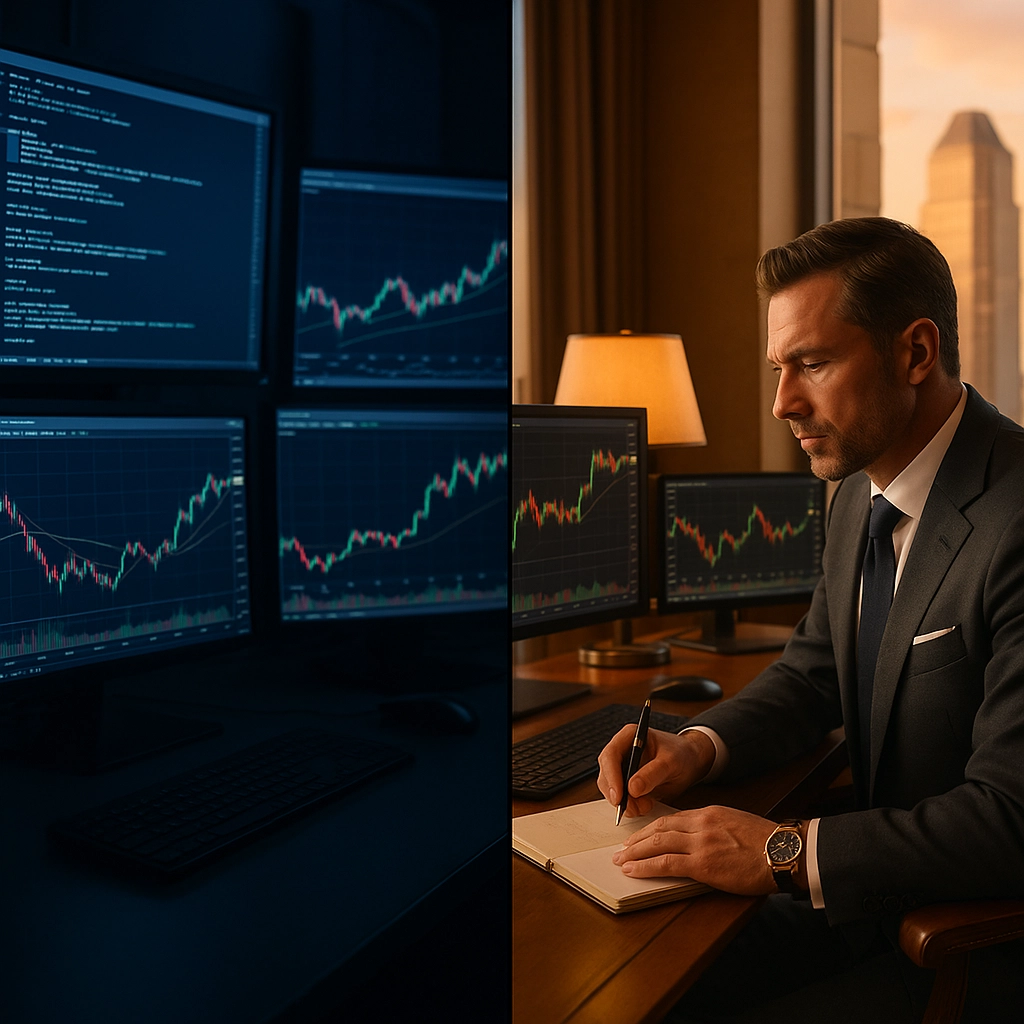
Inside the Darlin Trading Analyst Desk
Our analyst desk operates with a structured yet flexible methodology that leverages both cutting-edge technology and human expertise. Here's what makes our approach different:
1. Multi-Layer Research Framework
Unlike firms that rely primarily on technical analysis or fundamental metrics, our analysts employ a comprehensive three-layer approach:
Macro environment assessment: Analyzing economic indicators, central bank policies, and global trends
Sector-specific deep dives: Understanding industry dynamics, competitive landscapes, and regulatory environments
Individual security analysis: Detailed examination of financial health, management quality, and growth potential
This layered approach allows us to identify opportunities others miss and avoid pitfalls that surface-level analysis would overlook.
2. Cross-Disciplinary Expertise
Our analyst desk isn't staffed with just finance majors. We've intentionally built a team with diverse backgrounds:
Former industry executives who understand business operations from the inside
Economists who can interpret complex macroeconomic signals
Data scientists who build proprietary models that complement our qualitative analysis
Behavioral specialists who understand market psychology and sentiment shifts
This diversity of thought creates a robust analytical environment where groupthink is challenged and multiple perspectives are considered.
Ray Dalio, founder of Bridgewater Associates, advocates for this approach: "Diversity of thinking is a strategic advantage. The more different kinds of smart people looking at a problem, the more likely you are to get a good solution."
3. Continuous Feedback Loop
Perhaps most importantly, our research process incorporates a rigorous feedback mechanism:
Every trade recommendation undergoes peer review
Performance is tracked against multiple benchmarks
Quarterly deep-dive reviews identify what worked, what didn't, and why
Lessons learned are systematically incorporated into future analysis
This commitment to learning and adaptation means our research process continues to evolve and improve.

Real Research, Real Results: Case Studies from Our Desk
Let me share a few examples of how our research approach has delivered results that would have been missed by purely algorithmic strategies:
Case Study 1: The Semiconductor Supply Chain Crisis
In late 2020, while many algorithms were still processing pandemic-related volatility, our analysts were having conversations with procurement officers across multiple industries. These discussions revealed early warning signs of what would become the global semiconductor shortage.
By connecting these qualitative insights with quantitative supply-chain data, we positioned our clients ahead of the massive rally in specific semiconductor equipment manufacturers—companies that were critical to expanding production capacity but weren't yet showing the financial signals that would trigger algorithmic interest.
Case Study 2: The Biotech Breakthrough
When a small biotech company announced promising early-stage results for a novel treatment approach, most algorithms categorized it as just another incremental development. Our healthcare specialists, however, recognized the fundamental shift this technology represented.
Through discussions with medical researchers, patent analysis, and deep dives into the scientific literature, we identified the broader implications months before they became apparent to the market. This research led to early positions in not just the innovator company but also several adjacent firms that would benefit from the technology's ecosystem.
Case Study 3: The ESG Misclassification
Algorithms increasingly incorporate environmental, social, and governance (ESG) ratings, but these can be misleading. When a major industrial company received a poor ESG score based primarily on historical data, algorithms responded by reducing exposure.
Our analysts dug deeper, examining the company's transformation efforts, interviewing management, and analyzing capital allocation plans. This revealed a company in the middle of a genuine sustainability pivot—one that would eventually be recognized by the market. Our clients were able to establish positions at attractive valuations before the narrative caught up with reality.
As Stanley Druckenmiller noted, "The best economic predictor I've ever met is the inside of the stock market." Our analysts excel at finding those inside signals that aren't yet visible to algorithmic systems.
The Human-Technology Partnership
To be clear, we're not anti-technology. In fact, our analysts leverage sophisticated tools every day. The difference is in how we use them.
Rather than letting algorithms make decisions, we use technology to:
Extend our reach: Processing more data than humanly possible
Identify anomalies: Flagging unusual patterns for human investigation
Test hypotheses: Running simulations against historical data
Remove bias: Challenging our own assumptions with objective data
This human-technology partnership represents the best of both worlds. As Howard Marks of Oaktree Capital observed, "Computers can do an unmatched job of processing reams of data and identifying relationships. But I think it'll be a long time before they can replicate the judgment required for successful investing."
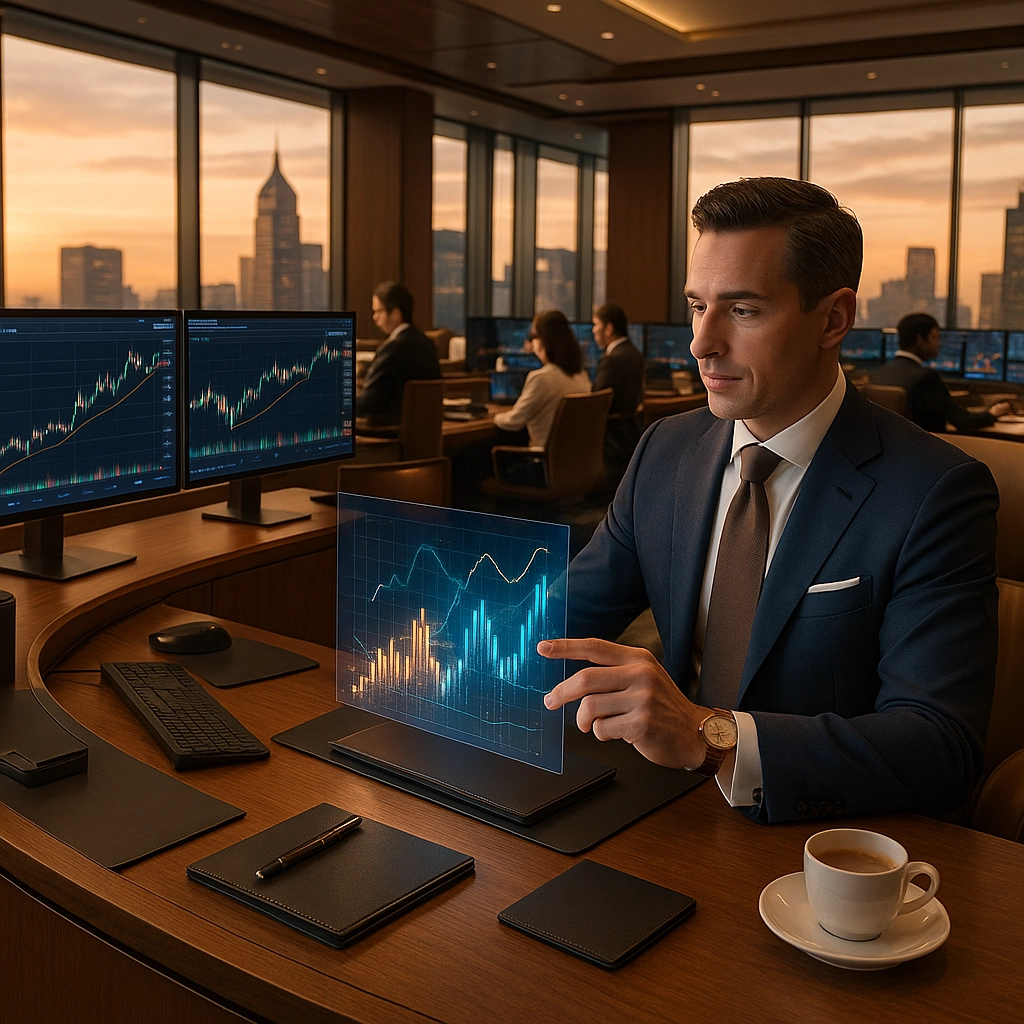
Why This Matters for Your Trading Success
If you're a Darlin Trading client or considering becoming one, here's why our research-first approach matters to your bottom line:
Reduced noise: In a world of information overload, our analysts separate signal from noise, helping you focus on what actually impacts your investments
Context-aware strategies: We provide not just trade ideas but the full context behind them, allowing you to trade with confidence and understanding
Resilience in unusual markets: When markets behave in ways that break historical patterns, our fundamental research provides stability and clarity
Continuous learning: Our research evolves with markets, incorporating new information and approaches rather than relying on static models
The Future of Research-Driven Trading
Looking ahead, we believe the value of real research will only increase. As algorithms become more sophisticated and widely adopted, the edge will increasingly belong to those who can think differently and see what the models miss.
At Darlin Trading, we're investing heavily in our analyst desk—not just in technology but in the human capital that drives our insights. We're expanding our team, developing proprietary research methodologies, and building stronger feedback mechanisms to continuously improve our process.
As Warren Buffett famously said, "Risk comes from not knowing what you're doing." Our mission is to ensure that when you trade with Darlin, you always know exactly what you're doing and why.
The Darlin Difference
The next time you execute a trade based on our research, remember that behind that recommendation stands a team of dedicated analysts who have examined the opportunity from multiple angles, challenged their own assumptions, and applied both quantitative rigor and qualitative judgment.
That's the Darlin difference—and that's why real research still wins.


Comments